Black Diamonds & Fiery Kicks: The Rise of Taiwan’s Edible Charcoal and Wasabi Peanuts
Walk into any traditional tea house in Nantou or a bustling night market in Taipei, and you will likely encounter two of Taiwan’s most visually striking snacks: jet-black bamboo charcoal peanuts and vibrant green wasabi peanuts. While they look more like volcanic stones and polished jade than party snacks, these crunchy treats represent a masterclass in agricultural survival, culinary innovation, and the unique Taiwanese ability to turn local ingredients into global sensations.
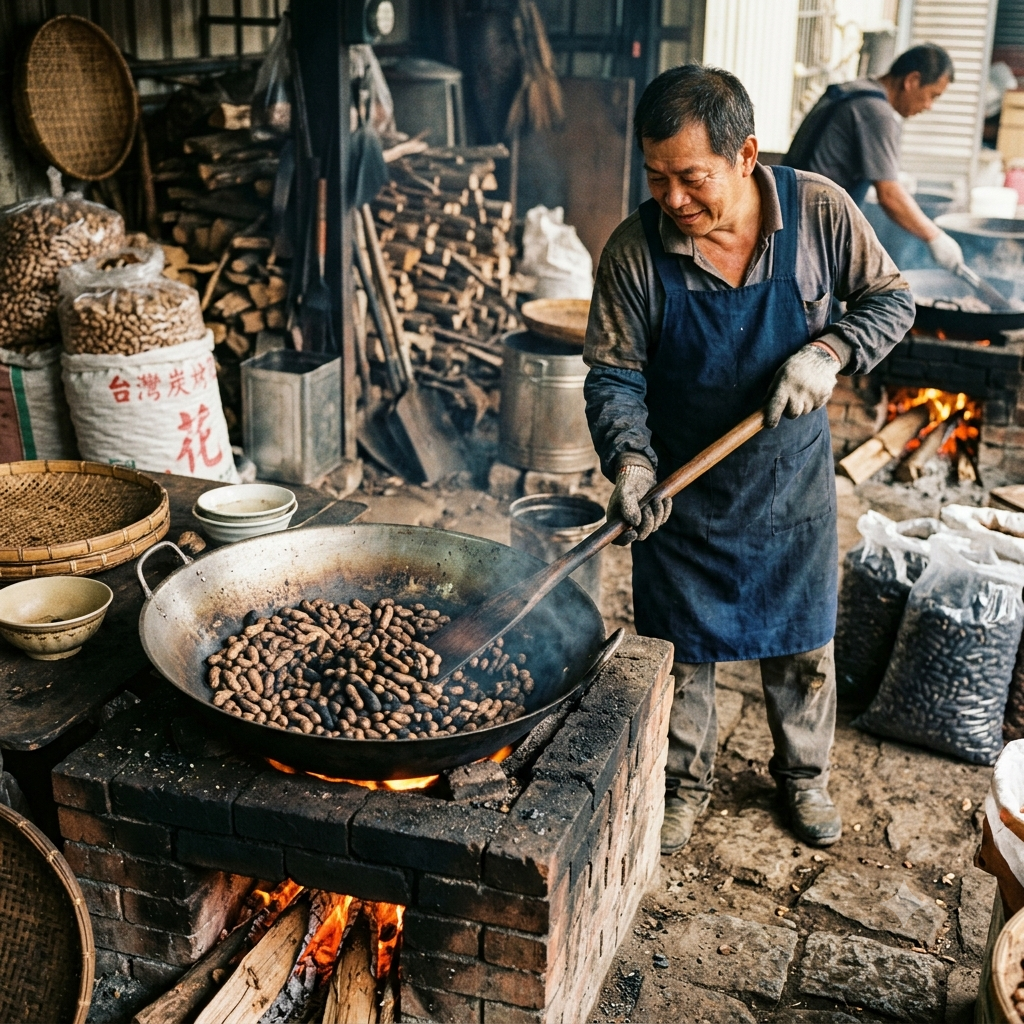
Here is the story of how a natural disaster and a pungent root transformed Taiwan’s humble peanut industry into an international culinary phenomenon.
The Foundation: Taiwan’s Historic Peanut Capital
To understand the rise of these coated snacks, one must look to the coastal plains of Yunlin County. For centuries, towns like Beigang and Yuanzhang have been the epicenter of Taiwan’s peanut farming.
The region’s loose, sandy soil and subtropical climate provide the perfect environment for growing exceptionally oil-rich, fragrant, and plump peanuts. For generations, these peanuts were sold raw, roasted, or pressed into cooking oil. However, by the late 20th century, cheap agricultural imports threatened local farmers, forcing the industry to innovate or fade away.
1. The Charcoal Peanut: Born from a Natural Disaster
The jet-black Bamboo Charcoal Peanut (竹炭花生) was not created in a corporate test kitchen; it was born out of regional resilience following a tragedy.
The Catalyst: The 1999 Earthquake
For decades, Zhushan (literally “Bamboo Mountain”) in Nantou County was famous for its sweeping Meng Zong bamboo forests. The region exported high-quality bamboo furniture worldwide, but the industry collapsed in the 1990s due to the rise of cheap plastics. The final blow came on September 21, 1999, when the devastating 921 Earthquake ripped through Central Taiwan, destroying local infrastructure and threatening the livelihoods of bamboo farmers.
The Innovation: Turning Waste into “Black Diamonds”
In 2002, the Taiwanese government launched a revitalization project. Researchers traveled to Japan to study ancient carbonization techniques, returning to teach local artisans how to burn mature bamboo in traditional clay kilns at temperatures exceeding 800°C.
[Harvested Bamboo] ➔ [800°C Clay Kiln Roasting] ➔ [Nano-Grade Grinding] = Edible Charcoal Powder
By the late 2000s, food scientists successfully applied nanotechnology to grind this ultra-pure charcoal into a fine, edible powder. Hoping to boost both the bamboo and peanut markets, manufacturers began rolling Yunlin peanuts in a cracker dough infused with this jet-black powder.
Flavor Profile & Visual Appeal
Despite looking like pieces of coal, the snack became an overnight sensation. The charcoal powder gave the outer biscuit shell an exceptionally airy, glassy crispness that contrasted perfectly with the rich, buttery roasted peanut inside. It was marketed as Taiwan’s edible “black diamond”—a symbol of luxury born from ash.
2. The Wasabi Peanut: A Cross-Cultural Fiery Kick
While the charcoal peanut is a product of domestic disaster recovery, the Wasabi Peanut (芥末花生)highlights Taiwan’s deep historical and culinary ties with Japan.
       [ CRISPY COATING COMPONENTS ]
┌───────────────────────────────┬───────────────────────────────┐
│     Wasabi Peanut Shell       │    Charcoal Peanut Shell      │
├───────────────────────────────┼───────────────────────────────┤
│ • Wheat flour & sugar         │ • Wheat flour & sugar         │
│ • Gardenia plant extracts     │ • 1% Nano-bamboo charcoal     │
│ • Horseradish/Wasabi powder   │ • Vegetable oil               │
└───────────────────────────────┴───────────────────────────────┘
The Japanese Influence
During the Japanese colonial period, horseradish and true Wasabi japonica cultivation were introduced to the cool, high-altitude slopes of Taiwan’s Alishan mountain range. As Taiwanese palate preferences evolved to embrace the sharp, sinus-clearing heat of Japanese condiments, snack manufacturers saw an opportunity to reinvent the classic roasted peanut.
Engineering the Perfect Sting
Standard Taiwanese wasabi peanuts do not use charcoal. Instead, a delicate flour-and-sugar batter is colored a bright, appealing green using natural plant extracts (like gardenia blue and yellow) before being dusted with a pungent blend of wasabi or horseradish powder. The genius of the snack lies in the balance: the initial sweet crunch of the shell quickly gives way to a fiery spike of heat that clears the sinuses, only to be immediately mellowed out by the savory, nutty oil of the roasted peanut inside.
The Modern Hybrid: Wasabi Charcoal Peanuts
In recent years, Taiwan’s culinary innovation has come full circle with the creation of a rare, high-end hybrid: the Spicy Wasabi Charcoal Peanut (芥末竹炭花生).
Produced by specialty boutique brands like Mr. JS (富強森) and local agricultural cooperatives, this snack plays a trick on the senses. Visually, it is indistinguishable from a standard, pitch-black charcoal peanut. However, the charcoal-infused dough is heavily dusted with sharp wasabi seasoning. Eating one delivers a surprising psychological twist—your eyes expect a deep, smoky, savory crunch, but your palate is instantly hit with a fiery, electric sting.
Why Are They So Popular?
Today, these coated peanuts have transitioned from regional souvenirs (Miyage) into mainstream global exports. Their enduring popularity relies on three distinct cultural factors:
- The Ultimate Drink Pairing: In Taiwan, these peanuts are the definitive companion to a cold glass of Taiwan Beer or a cup of hot, earthy Oolong tea. The crisp shell absorbs oils, while the salt, sweetness, and spice cut through the bitterness of alcohol and tea.
- Textural Mastery (Q-texture): Taiwanese food culture places an immense emphasis on mouthfeel. The distinct, brittle shatter of the nano-charcoal and wasabi shells provides a sensory satisfaction that standard roasted peanuts simply cannot replicate.
- The Perfect Souvenir: Packaged in beautifully designed resealable bags or gift boxes, their striking colors (deep charcoal black and vivid green) make them an intriguing, shelf-stable, and highly giftable token of Taiwanese ingenuity.
From the ashes of an earthquake to the high-altitude fields of Alishan, these coated peanuts prove that Taiwan’s food culture is defined by resilience, creativity, and an unwavering dedication to the perfect crunch.